Global Summit on Digital Trade and Digital Platforms discusses leveraging the UAE law as a model for developing a comprehensive UNCITRAL law

Global Summit on Digital Trade and Digital Platforms discusses leveraging the UAE law as a model for developing a comprehensive UNCITRAL law
Global Summit on Digital Trade and Digital Platforms discusses leveraging the UAE law as a model for developing a comprehensive UNCITRAL law
H.E. Bin Touq: “Under the guidance of its wise leadership, the UAE has begun exporting its legislative models to the world, setting a benchmark for countries developing modern legal frameworks.”
The Ministry of Economy and Tourism organised the first edition of the Global Summit on Digital Trade and Digital Platforms in Dubai, in cooperation with the United Nations Commission on International Trade Law (UNCITRAL). The event marks a significant milestone in strengthening the UAE’s position as a global hub for new economy legislation. It focused on leveraging the UAE’s digital trade law, particularly Federal Decree-Law No. 14 of 2023 on Trading by Modern Technological Means, as a model for developing a new global legal framework for digital trade and digital platforms, enhancing the competitiveness of the legislative ecosystem for digital trade, globally.
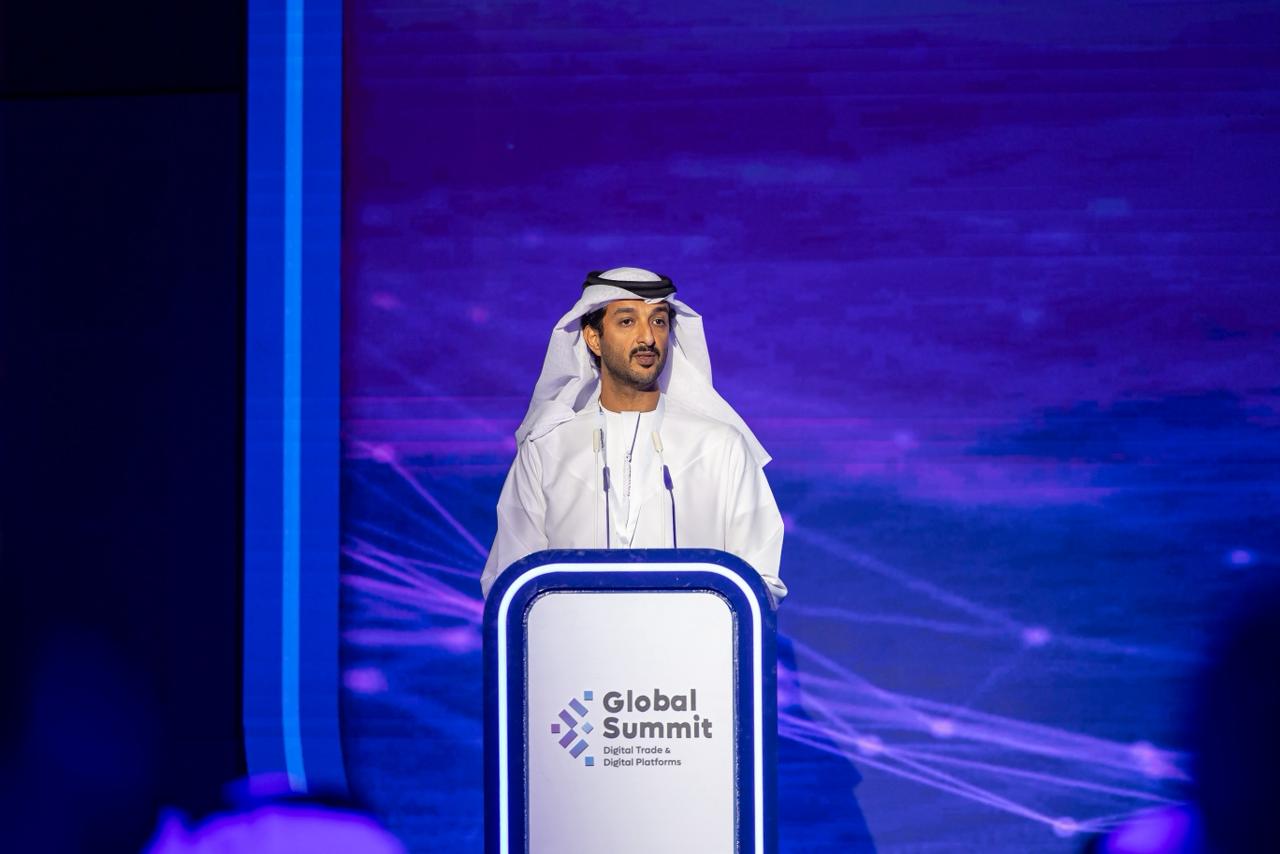
The Summit was attended by H.E. Abdulla bin Touq Al Marri, Minister of Economy and Tourism; Ms. Anna Joubin-Bret, Secretary of the UNCITRAL; and representatives from governments and international organisations, along with legal experts and innovators from the private sector.
The Summit advanced the global dialogue on establishing a comprehensive legal framework that supports innovation in digital trade. It builds on a proposal submitted by the UAE during the 67th session of UNCITRAL Working Group IV on e-commerce, held in Vienna in November 2024, which put forward the UAE’s Law on Trading by Modern Technological Means as a model legislative reference for digital trade governance. Spain later joined the proposal, and it was officially adopted by UNCITRAL last July, after which the UNCITRAL Secretariat was mandated to begin exploratory work on the legal aspects of digital trade. The UAE initiative has also garnered support from leading national and international organizations, including Dubai CommerCity, Majid Al Futtaim Group, Al Khayyat Group, Al Tamimi & Company, and LexisNexis.
H.E. Abdulla bin Touq Al Marri, Minister of Economy and Tourism, said: “Under the guidance of its wise leadership, the UAE has begun exporting its legislative models to the world, setting a benchmark for countries developing modern legal frameworks. This has further strengthened the nation’s position as a leading global hub for the digital and new economies, particularly digital trade - one of the key sectors showcasing the UAE’s advanced experience in economic diversification and openness to global markets. The UAE remains committed to adopting forward-looking legislation and strategic initiatives that support the development of a new economic model rooted in innovation and global competitiveness, reinforcing its role at the centre of global economic transformation.”
In his opening speech at the Summit, H.E. added: “The UAE recognised early on the growing importance of digital trade and its role in driving the growth of global trade, as well as the impact of technological advancement and artificial intelligence (AI) on consumers, competition and the transcendence of traditional geographical boundaries in digital financial transactions. In this context, the UAE enacted the Law on Trading by Modern Technological Means, which has gained global recognition as the world’s first comprehensive legislation regulating all dimensions of trade conducted through modern technologies - from traditional e-commerce to emerging and future forms of digital trade. The law also advances the national goal of positioning the UAE as the world’s leading country in developing proactive legislation for new economic sectors by the next decade, in line with the ‘We the UAE 2031’ vision.”
His Excellency continued: “In affirmation of the UAE’s national efforts to build an advanced legislative environment for digital trade and digital platforms, we are proud that the country is now taking the lead internationally in developing integrated legislative models adopted by specialized UN bodies. The adoption of the Digital Trade Law as a reference model for shaping global digital trade legislation marks a major step forward, transforming it into an international initiative that helps define the future of digital trade. This achievement reflects the institutional and legislative maturity of the UAE’s economy and reinforces its position as a global leader. It also sends a clear message to investors about the UAE’s ability to provide modern, flexible legal frameworks that support innovation, strengthen confidence in the digital economy, and open new avenues for international cooperation in building global legal foundations for digital trade.”
His Excellency explained: “Through the Summit, we will engage in discussions and dialogues that support the development of a global legal framework for digital trade. It is important to highlight that the Law on Trading by Modern Technological Means has helped redefine the concept of digital platforms. These platforms are no longer mere intermediaries; they have evolved into integrated systems that provide interconnected services and manage complex data flows. This transformation necessitates a comprehensive regulatory model that aligns with modern business practices and rapid technological advancements.”
His Excellency further noted that the UAE continues to lead globally in digital trade readiness, reinforcing its position as an international hub for digital commerce. This progress is driven by ambitious transformation strategies and the rapid adoption of modern technologies, as highlighted in a recent global report issued by Standard Chartered.
In detail, the Summit focused on the pivotal role of digital platforms as a key pillar of global economic growth and a major driver in reshaping value chains and facilitating the seamless flow of data and services across borders. It also emphasized the importance of strengthening international consensus on the standards and rules governing digital trade, which is essential for building a more harmonized global environment, as well as it highlighted the need to embed platform-based innovation within coherent legislative frameworks capable of keeping pace with future developments. In addition, the forum reviewed mechanisms to enhance cross-border legal cooperation among governments, regulatory bodies, and private-sector institutions, with the aim of unifying efforts toward establishing an integrated global system for digital trade.
The forum underscored the growing integration of smart goods and comprehensive digital services, with a focus on the role of artificial intelligence in reshaping conformity standards, liability frameworks, and consumer expectations. It also examined the significant transformation digital platforms have undergone - transitioning from their earlier, limited role as intermediaries in the e-commerce era to becoming essential part of business operations. This evolution is particularly evident in the services sector, including consulting, music, arts and film, and a wide range of commercial services that now begin and end entirely within digital platforms.
The Summit was attended by more than 15 international institutions, technical teams, and global universities concerned with digital trade and digital platforms, representing a diverse spectrum of government agencies and international organizations concerned with commercial and digital legislation, along with top legal experts and innovators in the private sector. It also brought together senior executives, owners of global digital platforms, and leading technology companies, policymakers, practitioners, and experts.
UNCITRAL is the principal legal body of the United Nations system in the field of international trade law, responsible for developing model laws worldwide. It plays a key role in establishing and maintaining a robust, transnational legal framework to facilitate international trade and investment. The Commission boasts a global membership specializing in the development of international trade law, finding innovative solutions, and modernizing and harmonizing rules relating to international business.