Ministries of Economy & Tourism and Justice launch forum on enhancing DNFBP sector’s compliance with anti-money laundering requirements


Ministries of Economy & Tourism and Justice launch forum on enhancing DNFBP sector’s compliance with anti-money laundering requirements
Ministries of Economy & Tourism and Justice launch forum on enhancing DNFBP sector’s compliance with anti-money laundering requirements
Forum highlights importance of collaborative efforts and joint action among relevant government entities to strengthen supervision and oversight across the sector
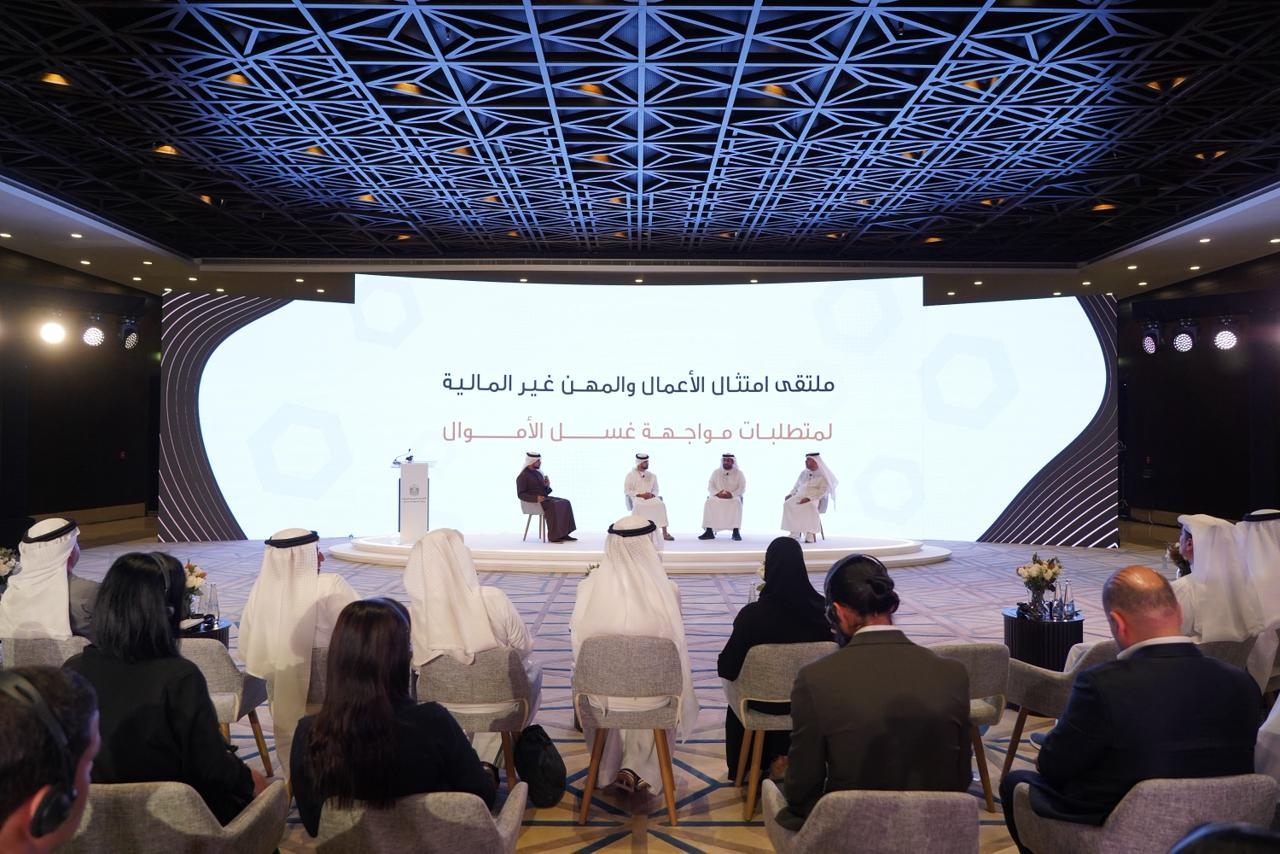
The Ministry of Economy and Tourism, in cooperation with the Ministry of Justice, organised the first forum in 2026 dedicated to enhancing the compliance of Designated Non-Financial Businesses and Professions (DNFBPs) with Anti-Money Laundering (AML) requirements. Held at the Ministry of Justice headquarters in Abu Dhabi, the forum brought together a wide range of private-sector representatives and experts specialising in anti-money laundering and combating the financing of terrorism (AML/CFT).
Organised as part of the ongoing efforts to implement the national AML/CFT strategy framework, the forum served as a platform to strengthen dialogue between the Ministry of Economy and Tourism and the Ministry of Justice on mechanisms to enhance compliance within the DNFBP sector. The sector includes real estate brokers and agents, dealers in precious metals and stones, independent accountants and auditors, corporate service providers, as well as lawyers and legal consultants. The initiative aligns with international best practices aimed at safeguarding the financial system from illicit exploitation, further reinforcing the country’s global standing in this field.
The forum featured a series of panel discussions and presentations supporting the implementation of applicable legislation and legal procedures related to anti-money laundering and combating financial crimes. The sessions highlighted the importance of conducting customer due diligence effectively and raising awareness among relevant private-sector entities about the importance of reporting suspicious financial activities.
Counselor Salem Ahmed Al Tunaiji, Director of the AML/CFT Department at the Ministry of Economy and Tourism, affirmed that the Ministry remains committed to establishing an integrated framework to enhance AML compliance. This includes leveraging cutting-edge technologies and advanced digital infrastructure to ensure efficient and effective monitoring and oversight of the DNFBP sector. He noted that these efforts have contributed to strengthening confidence in the country’s business environment and safeguarding the reputation of the national economy at both regional and international levels.
Judge Dr. Abdullah Al Rashid, Director of the Anti-Money Laundering and Counter-Terrorism Financing Department at the Ministry of Justice, emphasised that regulatory authorities organise such forums to strengthen the compliance of Designated Non-Financial Businesses and Professions with AML/CFT requirements. He noted that real estate brokers and agents, dealers in precious metals and stones, independent accountants, corporate service providers, as well as lawyers and legal consultants bear the responsibility of implementing robust controls to report suspicious activities and conduct customer identification and verification in line with international best practices. He further added that the Ministry of Justice and the Ministry of Economy and Tourism remain committed to further enhancing understanding of regulatory requirements within these sectors, as well as among relevant personnel, thereby reinforcing a culture of compliance as a core element of regulatory and operational responsibilities.
Promoting the roles of supervisory authorities in overseeing DNFBP sector
The forum’s inaugural session presented an integrated vision for enhancing the role of supervisory authorities in overseeing the DNFBP sector, in the presence of Counselor Salem Al Tunaiji and Judge Dr. Abdullah Al Rashid. The vision highlighted the importance of collaborative efforts and joint action among relevant government entities to strengthen supervision and oversight across these sectors. This will be achieved through the adoption of robust legislative and regulatory frameworks, effective information exchange, and the activation of inspection and awareness mechanisms, in addition to continuous coordination with the private sector. The objective is to ensure a comprehensive understanding of risks and achieve the highest levels of compliance with AML/CFT legislative requirements.
The second session highlighted the outcomes of the UAE National Risk Assessment. It provided a comprehensive understanding of the challenges associated with money laundering and terrorism financing crimes across various sectors, particularly DNFBPs. The session also underscored the role of this assessment in enabling supervisory authorities, including the Ministry of Economy and Tourism and the Ministry of Justice, to unify efforts and determine priorities. It facilitates the development of regulatory frameworks and internal policies, and strengthens oversight and compliance mechanisms, based on a risk assessment methodology to protect the national financial system and enhance financial transparency.
Customer due diligence requirements
The forum featured a presentation on customer due diligence (CDD) requirements for Designated Non-Financial Businesses and Professions. It emphasised the need for entities operating in these sectors to implement robust due diligence measures, including verifying the identities of customers and beneficial owners and assessing risks throughout the course of the business relationship. These measures aim to enhance the effectiveness of monitoring and follow-up processes, detect and prevent suspicious activities, and ensure full compliance with national and international AML/CFT standards.
Challenges associated with due diligence requirements
The forum also shed light on several challenges facing the implementation of due diligence requirements. These include limited resources, the need to enhance specialised expertise, gaps in understanding relevant legislation, reliance on certain manual processes, and the limitations of existing technical tools. Addressing these challenges requires strengthening internal policies and procedures and further developing human capabilities to ensure full compliance with legislative and regulatory standards governing these requirements.
Practical methodology for FATF mutual evaluation
The forum concluded with a presentation by the Ministry of Economy and Tourism on the practical methodology of the mutual evaluation conducted by the Financial Action Task Force (FATF) and the Middle East and North Africa Financial Action Task Force (MENAFATF). The presentation reviewed the efficiency and effectiveness of the AML/CFT framework through an analysis of its technical compliance with FATF recommendations, as well as an assessment of the practical outcomes for the national financial system. It also highlighted key practical recommendations aimed at achieving the highest levels of compliance and transparency.