Ministry of Economy and Tourism explores UAE’s accession to the Geneva Act of the Lisbon Agreement on Appellations of Origin and Geographical Indications during meeting with WIPO


Ministry of Economy and Tourism explores UAE’s accession to the Geneva Act of the Lisbon Agreement on Appellations of Origin and Geographical Indications during meeting with WIPO
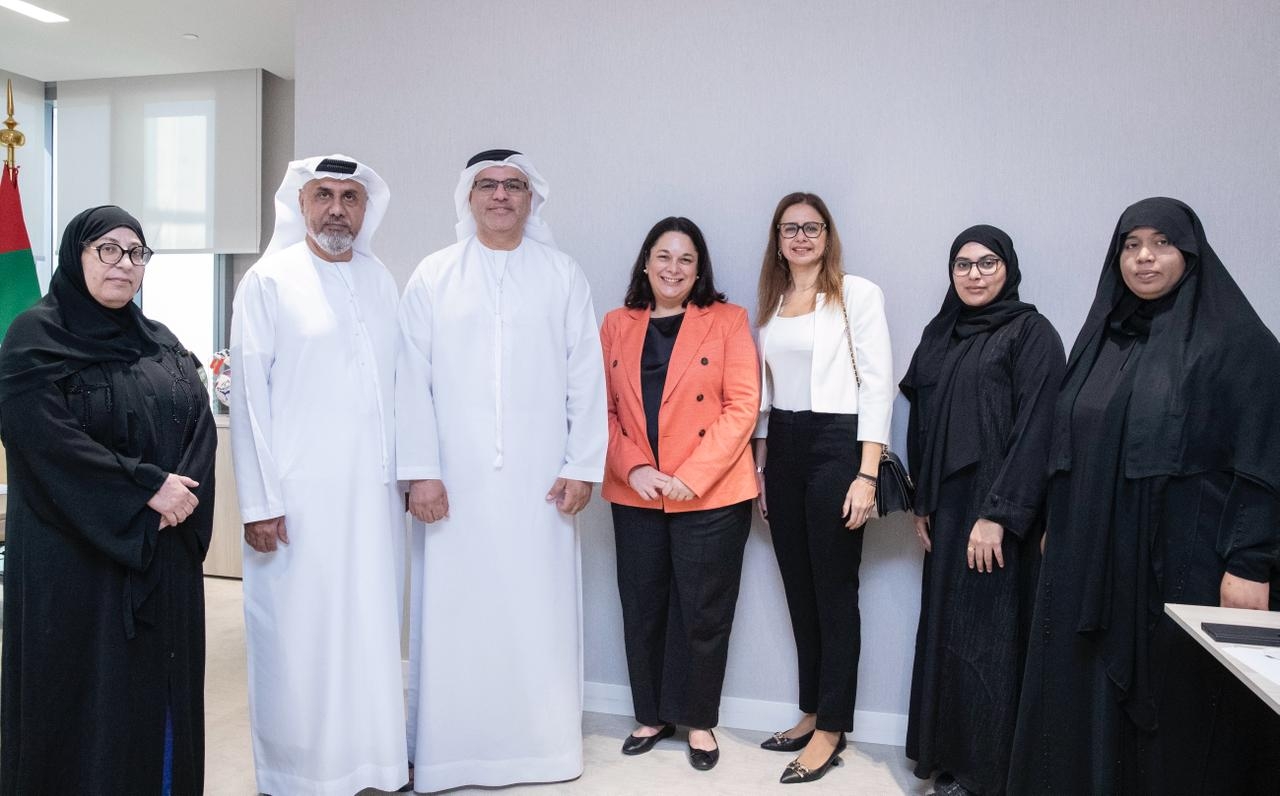
Ministry of Economy and Tourism explores UAE’s accession to the Geneva Act of the Lisbon Agreement on Appellations of Origin and Geographical Indications during meeting with WIPO
H.E. Bin Touq underscores the UAE’s progress in using the geographical indications system within its IP protection framework to safeguard innovation and national products
The Ministry of Economy and Tourism hosted a delegation of experts from the World Intellectual Property Organization (WIPO) on an official visit to the United Arab Emirates from 24 to 28 November 2025. The visit aimed to strengthen cooperation across various fields related to intellectual property (IP), particularly in the area of geographical indications, in support of enhancing the competitiveness of national products with geographical origin and aligning them with global best practices.
During the meetings, the two sides discussed the possibility of the UAE joining the Lisbon System for the International Registration of Appellations of Origin and Geographical Indications. The UAE’s accession will further reinforce the protection of national products bearing geographical indications and ensure greater alignment of national economic policies with relevant international standards. The Geneva Act offers producers of origin-linked products faster and more efficient protection for their distinctive appellations at both regional and international levels, at a lower cost, while also expanding global marketing opportunities for these products.
H.E. Abdulla bin Touq Al Marri, Minister of Economy and Tourism, said: “The UAE has made significant strides in developing a comprehensive legislative and regulatory framework for IP, which serves as a key pillar in the country’s transformation into a global hub for the new economy and a preferred destination for innovation and creative industries. In line with this vision, the Ministry of Economy and Tourism has prioritized the establishment of proactive and pioneering IP legislation and policies, building strategic partnerships, and fostering a competitive environment that protects the rights of inventors and creators while enhancing the competitiveness of national products.”
His Excellency added: “We remain committed to advancing our strategic and sustainable partnership with WIPO to exchange expertise and review best practices, thereby reinforcing the UAE’s regional and global leadership across various IP applications. We also strive to enhance IP frameworks and the GI system for our national products, strengthening their standing as products of quality, authenticity, and strong links to their places of origin and culture. In May this year, the Ministry launched the GI system for national products, the first-of-its-kind federal initiative designed to safeguard local products that originate from specific geographical regions in the UAE.”
H.E. Abdullah Ahmed Al Saleh, Undersecretary of the Ministry of Economy & Tourism, said: “During WIPO’s visit to the UAE, we explored future avenues of cooperation to develop integrated legislative and regulatory frameworks for national products bearing geographical indications, ensure unified international legal protection for their appellations, and unlock new opportunities for these products in international markets. This approach will help enhance their economic value by recognizing their uniqueness and quality linked to their geographical origin, in line with the UAE’s vision of building a sustainable, competitive economy driven by innovation and knowledge.”
During the visit, a coordination meeting was convened with the participation of various relevant government entities, including the Ministry of Economy and Tourism, the Ministry of Culture, and the Ministry of Climate Change and Environment. The meeting discussed the geographical indications framework, reviewing protection mechanisms and registration requirements, and highlighting the impact of the ecosystem on the country’s cultural, agricultural, and environmental sectors. It also explored ways and mechanisms to support the UAE’s accession to the Lisbon System for the International Registration of Appellations of Origin and Geographical Indications.
The meeting featured a comprehensive overview of the UAE’s national geographical indications framework, including the existing legislative and regulatory framework, registration and protection mechanisms, and an assessment of its alignment with the Lisbon System. Discussions also covered the international requirements and standards, along with key areas for possible development. The meeting included an evaluation of national products nominated for GI registration, assessing their readiness in line with internationally recognised criteria. It was agreed to prepare an initial visualisation for the next stage, aimed at establishing an integrated UAE system for GI and determining the recommendations and outputs needed for its implementation.
The first phase of the UAE’s GI registration service covered four national products, which are: honey from the Hatta region, remarkable for its high quality associated with the mountainous environment and traditional production practices; ceramics from the Emirate of Ras Al Khaimah (RAK), which has a long history of craftsmanship and handcrafts as one of the emirate’s most prominent exports; Dabbas dates from the Al Dhafra region, which carry an authentic agricultural character and a distinguished reputation; and traditional palm frond products crafted across various emirates, reflecting the UAE’s authentic artisanal heritage.
During the meeting, the government entities also explored ways to develop national capacities through training programs and technical support offered by WIPO. They discussed mechanisms to maximise the UAE’s benefit from the Geneva Act in preventing the misuse or imitation of GI-tagged products or their misleading use. They also explored ways to enhance the economic and social value of local products by recognising their distinctiveness and quality linked to their geographical origin.
Entering into force on 26 February 2020, the Geneva Act strengthens mutual recognition among member countries for registered appellations of origin and geographical indications. It expands the scope of international protection without requiring separate registrations in each jurisdiction. The Act also enhances consumer confidence by ensuring that registered products are linked to verified quality standards and the authentic characteristics of their geographic origin, thereby reducing the risk of misleading or unlawful use of geographical names.
By joining the Geneva Act, a country becomes part of a unified system that brings together the Lisbon Agreement and the Geneva Act, enabling farmers, producers, and artisans who rely on protected appellations of origin and GIs to benefit from greater flexibility, stronger international safeguards, and broader global market privileges.